
When you’re planning a new concrete pool in Brisbane, the shell is only part of the decision. What goes on the inside surface will shape how your pool looks, how it feels underfoot, how it weathers Queensland’s climate, and how much time and money you’ll spend maintaining it over the coming decades. It’s a decision that deserves more thought than most homeowners give it.
What Is Pebblecrete?
Pebblecrete is a pool surface finish made from a blend of naturally rounded small stones (pebbles) combined with a cement-based binder. Once applied by hand to the shell of a concrete pool, the surface is treated with a chemical wash that exposes the pebbles and gives the finish its characteristic texture and appearance. The result is a seamless, durable interior surface that has been a staple of Australian pool construction for decades.
The term ‘pebble crete’ is sometimes used interchangeably with ‘pebblecrete’, ‘exposed aggregate’ and ‘pebble finish’ – they all refer to broadly the same product category, though the specific aggregate blend, pebble size and binder mix will vary between suppliers and applications. At the premium end of the range, glass bead blends and larger aggregate mixes offer distinct visual and tactile results worth exploring.
Why Pebblecrete Performs So Well in Brisbane’s Climate
Brisbane’s subtropical climate places real demands on pool surfaces. Intense UV exposure through the warmer months, significant temperature variation between seasons, heavy rainfall periods and the chemical demands of keeping a pool sanitised year-round all take a toll. This is where pebble crete earns its reputation.
The exposed aggregate composition resists fading and chemical degradation more effectively than painted or render-only surfaces. Rather than a surface coating that sits on top of the substrate and is vulnerable to peeling or flaking, pebblecrete is an integral finish – the pebbles are embedded in the binder and the entire surface depth contributes to its resilience. With appropriate water chemistry management and the occasional reseal, a well-applied pebblecrete surface can be expected to last 15 to 25 years in South East Queensland conditions. That’s a significantly longer serviceable life than pool paint, which typically requires recoating every 5 to 7 years.
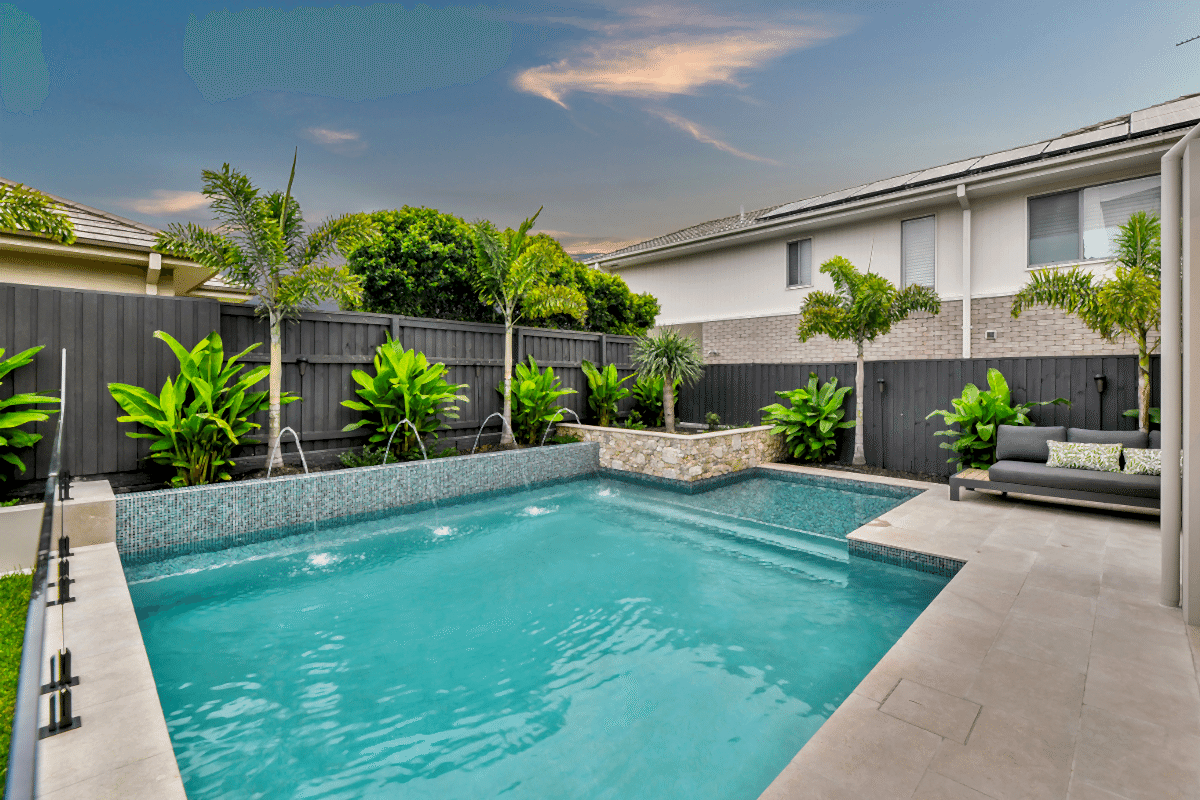
The texture of the surface also works in its favour in Queensland’s sun-drenched conditions. The natural variation across the surface diffuses light rather than reflecting it directly back, which reduces the harsh glare that can make a pool uncomfortable to look at on a bright day. Depending on the colour and aggregate blend chosen, pebblecrete can also create a striking shimmer effect in direct sunlight that works beautifully in luxury pool settings.
The Practical Benefits Worth Knowing About
Durability and Chemical Resistance
Pebblecrete resists staining, fading and chemical damage more effectively than most alternative surfaces. The cement-and-pebble matrix is not reactive to the chlorine, pH adjusters and mineral treatments used in standard pool care – a meaningful advantage when you consider that your pool water is in constant contact with the surface. Pool construction professionals consistently recommend it for Brisbane homeowners who want a long-term surface that won’t require significant remediation within the first decade.
Slip Resistance and Safety
The textured nature of pebblecrete provides natural grip, which makes it genuinely safer underfoot – particularly on pool steps and shallow entry areas where wet feet are the norm. For family pools where children are using the pool regularly, this is a practical advantage that smooth render or tiled surfaces don’t match as naturally. The texture can be adjusted during application – finer aggregate blends produce a softer underfoot feel while maintaining grip, which suits pools used predominantly by adults.
Colour and Customisation
One of pebblecrete’s underappreciated strengths is the range of colour and finish options available. Natural earth tones, blues, charcoals and blended mixes can all produce dramatically different water colours and visual atmospheres. A darker aggregate blend tends to produce deeper, more reflective water tones reminiscent of natural bodies of water, which is particularly effective in luxury pool designs and infinity pool applications. Lighter finishes maximise that classic bright blue pool look. The right choice here connects closely to the architectural style of your home and outdoor space, so it’s worth working through options carefully during your design process.
Seamless Application
Unlike tiled surfaces, pebblecrete is applied as a continuous, seamless finish across the entire pool interior. There are no grout lines, no tile edges and no joints that can crack, lift or allow water ingress over time. This seamless quality also makes the surface easier to clean and vacuum, with fewer areas for algae or debris to accumulate.
Cost Positioning
Pebblecrete sits in a strong cost position relative to other premium finishes. It offers significantly better durability and aesthetics than pool paint at a fraction of the long-term cost when you factor in recoating frequency. Compared to a fully tiled interior, pebblecrete is considerably more affordable in upfront application cost while still delivering an attractive, lasting result. For homeowners building a quality concrete pool who want a premium surface without the premium price point of full tiling, pebblecrete hits the mark well.
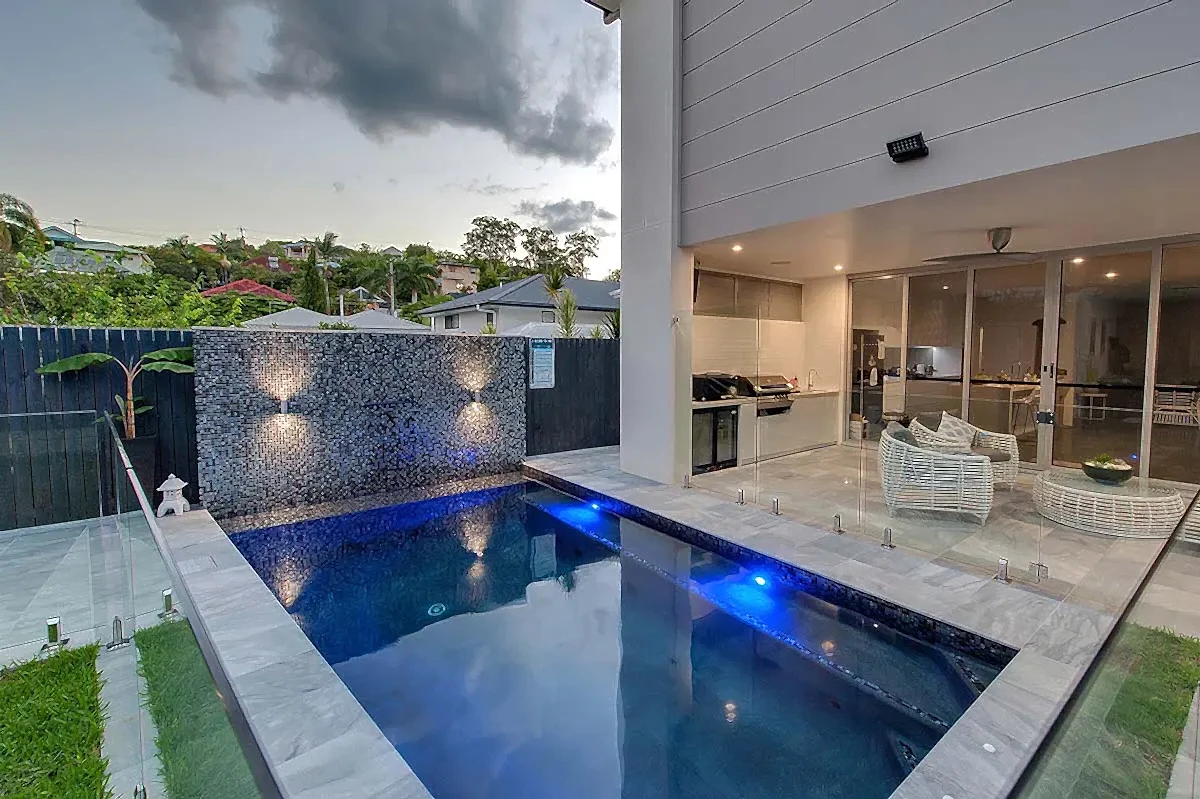
Pebblecrete Colour Selection for Brisbane Pools
Choosing the right colour is where many homeowners spend too little time. The key variables to consider are your home’s exterior palette, the level of sun exposure the pool receives and what water colour effect you’re aiming for.
In Brisbane’s high-UV environment, lighter finishes will produce a bright, vibrant blue-green water tone that photographs well and feels holiday-like. Mid-tone blends – charcoals, slate blues and mixed earth tones – produce a more sophisticated, natural appearance. Darker finishes create depth and a sense of calm that works particularly well in luxury pool and infinity pool contexts where the water’s reflective quality is a feature in itself. Surrounding hues, whether it’s greenery, timber decking, rendered walls or stone paving, all interact with the water colour and should be factored into the selection.
It’s also worth noting that pebblecrete colour will appear slightly different when the pool is empty versus full, and in different lighting conditions. Viewing samples submerged in water – rather than just laid flat in a showroom – gives a far more accurate read of the finished result.

How Pebblecrete Is Applied
Understanding the application process helps you appreciate why quality workmanship matters so significantly with this finish. The existing pool shell is thoroughly cleaned and prepared to ensure the pebblecrete compound bonds correctly to the substrate. The pebbles, binder and any additional inclusions are mixed to a consistent compound and applied by hand across the entire interior surface, with care taken to achieve consistent thickness and texture throughout.
Once applied, the surface is treated with a chemical wash to expose the aggregate and reveal the finish. It is then thoroughly cleaned and sealed before the curing period begins – a process during which the surface solidifies into its final, robust state. The quality of each stage directly affects the longevity and appearance of the finished surface, which is why choosing experienced pool builders matters considerably with this type of finish. Inconsistent application thickness or inadequate preparation of the shell are common causes of premature surface failure that could otherwise be avoided.

Maintaining a Pebblecrete Pool Surface
Pebblecrete is genuinely low-maintenance relative to most alternative surfaces, but ‘low-maintenance’ doesn’t mean ‘no maintenance’. The primary requirements are maintaining correct water chemistry, regular cleaning with an appropriate pool brush, and periodic resealing when required.
Water chemistry balance is the single most important maintenance factor for pebblecrete longevity. Consistently low pH (acidic water) will gradually etch and erode the cement binder, shortening the surface life considerably. Conversely, consistently high calcium hardness can lead to calcification and surface roughness. Keeping your pool water within the recommended ranges for pH, alkalinity, calcium hardness and sanitiser levels is the most effective thing you can do to protect your pebblecrete investment.
Regular brushing with a suitable pool brush keeps the surface free of algae growth and debris accumulation in the textured aggregate. A pool vacuum handles the floor effectively given the surface’s natural grip. Where minor surface repairs become necessary over time, these are typically straightforward to address before they develop into larger issues – the key is not ignoring early signs of surface wear or isolated damage.
Pebblecrete and Pool Design: Making It Work for Your Project
The surface finish is one design element among many, and it works best when considered as part of the overall pool design rather than an afterthought. How your pebblecrete finish interacts with your coping material, your pool tiles on the waterline, your pool fencing, your pool lighting and the broader outdoor environment all matter.
Pool lighting in particular interacts strongly with pebblecrete’s textured surface – the aggregate creates a visual depth and shimmer effect under LED lighting that smoother surfaces don’t replicate. If pool lighting is part of your brief (and in a Brisbane outdoor entertaining context, it usually should be), it’s worth selecting your pebblecrete colour with evening lighting conditions in mind as well as daytime appearance.
For pools incorporating a pool and spa combination, consistency between the pool interior finish and the spa interior is worth considering. A continuous pebblecrete finish across both creates a unified, cohesive result. Similarly, for free form pools, the seamless nature of pebblecrete application suits the organic shapes and curved forms that characterise free-form pool design.
Questions to Ask Before You Decide
Before committing to pebblecrete – or any surface finish – it’s worth working through a few practical questions with your builder.
What aggregate blend and colour options are available, and can you view them submerged in water? How does the proposed finish interact with your planned coping, waterline tiles and outdoor surfaces? What warranty applies to the surface application? What are the specific maintenance requirements for the product being used? And if this is a resurfacing project rather than a new build, what surface preparation will be required before application?
A builder who can answer these clearly and walk you through the decision with specifics – not generalities – is the kind of partner worth working with. Browse the Environ Pools portfolio to see pebblecrete surfaces in completed Brisbane projects and get a realistic sense of how different finishes look in context.
Environ Pools has been building and finishing custom concrete pools in Brisbane for close to three decades. If you’re working through your surface options or starting your pool design process from scratch, get in touch with our team for an honest, no-pressure conversation about what will work best for your project. You can also explore our pebble crete service page for more detail on the finishes and options we offer, and read what our clients say about the finished result.