

Understanding Concrete Pool Installation
Installing a concrete swimming pool is a major investment that combines design, engineering, and craftsmanship. Unlike prefabricated fibreglass or vinyl pools, a concrete pool is built entirely on-site, allowing for complete customisation in size, shape, depth, and finish. This flexibility makes concrete pools the preferred choice for homeowners who want a bespoke design and long-term durability.
Concrete pool installation involves several technical stages, from design and approvals to excavation, concreting, curing, and finishing. Each step must be carefully planned and executed to ensure structural strength, waterproofing, and aesthetic quality. When done correctly, a concrete pool can last more than 50 years with proper maintenance, offering unmatched design freedom and long-term value.
The Planning and Design Stage
The process begins with design, engineering, and approvals. During this phase, homeowners work with their pool builder to select the desired layout, features, and finishes. A site assessment is carried out to evaluate soil stability, drainage, and access for excavation equipment.
In Queensland, pool builders must obtain building approval from a licensed certifier or local council. This approval ensures the design meets the Queensland Building and Construction Commission (QBCC) safety and construction standards. Once approved, the project can move into excavation and site preparation. (QBCC)
Excavation and Site Preparation
Excavation marks the beginning of physical construction. The pool area is marked out according to the approved design, and excavation begins using earthmoving equipment. The excavation depth must accommodate the pool’s structural shell and finishes.
Builders like Environ Pools note that soil conditions play a major role during this stage, particularly in Brisbane, where reactive clay and sloping sites are common. Proper excavation, drainage, and base preparation are essential to prevent future settling or cracking. Once excavation is complete, the base is levelled, and formwork is installed to outline the pool’s structure.
Steel Reinforcement, Plumbing, and Formwork
Next, a steel reinforcement cage is constructed inside the excavation. This framework gives the concrete shell its strength and helps the structure resist ground pressure and water loads. Plumbing lines for filtration, skimmers, returns, and water features are installed before the concrete is applied. Electrical conduits for lighting and automation systems are also positioned at this stage.
The steel must be tied securely and spaced correctly to maintain structural integrity. This is one of the most important phases, as the reinforcement determines the pool’s long-term stability.
Concrete Application (Shotcrete or Gunite)
Once the reinforcement and plumbing are complete, the concrete shell is created using either shotcrete (wet mix) or gunite (dry mix). Both methods involve spraying concrete through a high-pressure hose onto the steel framework, allowing it to compact tightly and form a dense, strong shell.
Shotcrete is the most common method used by Brisbane builders such as Environ Pools because it provides greater consistency and allows for creative shaping. After spraying, the surface is hand-shaped and smoothed to achieve the desired contours, steps, benches, and ledges.
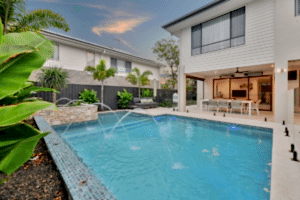
Curing and Waterproofing
Curing is a critical step that determines the strength and durability of the concrete. Once the shell is formed, it must cure for at 4 weeks to reach optimal compressive strength. During this period, the surface must be kept moist to prevent shrinkage and cracking.
After curing, the pool shell is waterproofed to prevent leaks. Builders may apply flexible membranes or additives that seal microscopic pores within the concrete. Proper curing and waterproofing are essential for a long-lasting, watertight structure, skipping this step can lead to costly repairs later.
Interior Finishes, Tiling, and Coping
Once the shell is fully cured and waterproofed, the pool is ready for interior finishing. Concrete pools can be finished with materials such as pebblecrete, quartz render, or glass mosaic tiles, each offering a different texture, appearance, and lifespan.
Pebblecrete is popular for its natural aesthetic and durability, while glass mosaic tiles provide a luxury finish with long-term colour retention. The surrounding coping stones — the edge between the pool and decking — are installed next, followed by paving or other landscaping features.
Interior finishes are what give the pool its final personality. Colour, texture, and material choice all influence the water’s appearance and feel.
Equipment Installation and Start-Up
The final construction stage involves connecting all mechanical systems, including pumps, filters, chlorinators, heaters, and lighting. The equipment is tested, calibrated, and balanced before the pool is filled with water.
Once filled, the water chemistry is adjusted to achieve proper pH and sanitisation levels. The builder or technician will demonstrate how to operate the pool system, maintain the water, and perform routine cleaning. In Queensland, a final inspection is conducted to ensure compliance with safety standards before the pool can be used.
Typical Timeline for Concrete Pool Installation
A standard concrete pool installation takes between 8 and 12 weeks, depending on design complexity, site conditions, and weather. The curing and finishing stages are the most time-intensive but also the most critical for ensuring quality and longevity.
Homeowners should also allow additional time for design and approval before construction begins, which can add another few weeks to the overall project. As Pool Research notes, the total duration from planning to first swim can easily span 12 to 16 weeks for a custom concrete pool.
Common Challenges and Best Practices
Concrete pool installation is a detailed process that requires careful planning and professional oversight. Common issues include poor site drainage, cracking from improper curing, and waterproofing failures. Hiring a licensed, experienced builder ensures each step is done correctly and in accordance with local standards.
Best practices include using high-quality concrete, adhering to curing timelines, maintaining communication with your builder, and confirming that all permits and safety inspections are completed. Choosing a reputable Brisbane builder such as Environ Pools ensures your investment is managed by professionals familiar with Queensland’s climate, soil, and regulations.
Conclusion
Installing a concrete pool is a major project, but when designed and built correctly, it delivers a lifetime of enjoyment, value, and beauty. From the first stage of design and approvals through to the final tile and water fill, each step plays a vital role in achieving a durable, watertight, and visually stunning result.
While the process may take longer than prefabricated alternatives, the reward is a completely customised pool that enhances your property and lifestyle for decades to come. Working with an experienced, licensed Brisbane builder ensures every detail, from excavation to finishing, is completed to the highest standard.